Decision Platform
Andrew W. Marshall Foundation
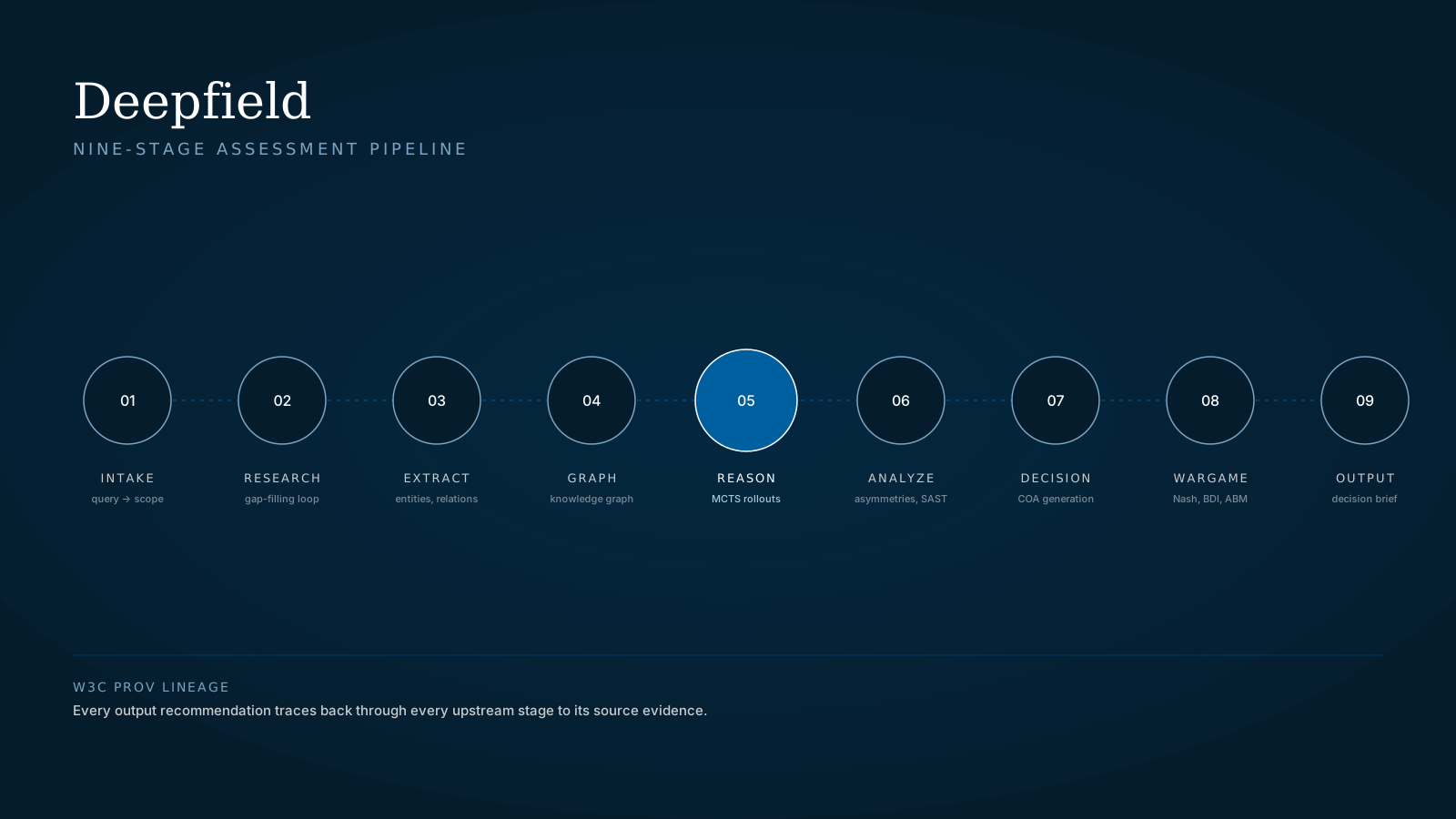
Deepfield: a modular assessment platform
An eleven-stage strategic assessment pipeline that turns a query into a defensible course of action with full evidence lineage.
See the engagement
Pathfinder is a Syntheos product that turns a map-shaped knowledge base into a navigable space. A user picks an origin community and a destination, the system finds the pathway between them, and a generated narrative explains the intellectual chain that connects the two.

The global structure of scientific research is mapped as a set of research communities, tens of thousands of clusters linked by co-citation and topical overlap. A map like that is a powerful object, but as a static visualization it's nearly useless. Nobody stares at a map of thirty thousand communities and picks out a story. You need a way to ask it questions. What links plasma physics to photonics? How did ion traps give rise to a metrology program? Where did quantum sensing come from? The map has the answers. The interface has to get out of the way.
Pathfinder is a Syntheos product. The University of Michigan deployment overlays Michigan's faculty research output on the SciTech Strategies Map of Science, so a user picks an origin community and a destination and sees the route between them. The system traces the pathway, highlights it on the map, and produces a narrative that explains the intellectual chain connecting the two endpoints. Each hop names the communities it crosses and the evidence for the transition. Users save a pathway and return to it as they extend a line of inquiry.
Pathfinder isn't tied to one data source. We deploy it three ways.
The Michigan deployment uses the blended pattern. The map gives the global geography. Michigan's publications populate it with what the institution actually works on.
Every narrative the system produces is built against the same constraint. Each hop on a pathway has to point to a real research community in the underlying map. The model doesn't get to invent a stand-in to make a sentence flow. If the data won't support the bridge, the system says so rather than papering it over.
That discipline pushes through the rest of the product. Errors surface where users can see them. A user who follows a pathway can always click back to the cluster of papers that anchors a claim. The narrative is a guide. The bibliometric record is the authority.
Static PDF exports of the bibliometric map. A research analyst who wanted to understand a pathway had to read a paper, make a few hand drawings, and hope they had covered it.
Roughly 10 to 14 weeks. We agree the data substrate (proprietary, Map of Science, or blended), ingest the map, wire the pathway finder, design the narrative structure, and deploy the running product with sign-in and billing.
The deliverable is a tool users open every day. A research analyst who once needed three days to trace a connection between two fields produces the trace in an afternoon. Each hop carries citations the analyst can verify against the underlying corpus. The bibliometric map becomes a working surface.
It's a fit when you have a corpus with cluster structure (research communities, patent families, internal program taxonomies, technology categories) that researchers want to navigate as a connected space. It's the wrong product when the corpus is small enough that a flat search returns what people need.
We've written a two-page business case for this engagement shape. Executive summary, problem statement, deliverables, risks, success metrics, investment range. Read it in the browser or print it to PDF and forward.
Read the business caseAn eleven-stage strategic assessment pipeline that turns a query into a defensible course of action with full evidence lineage.
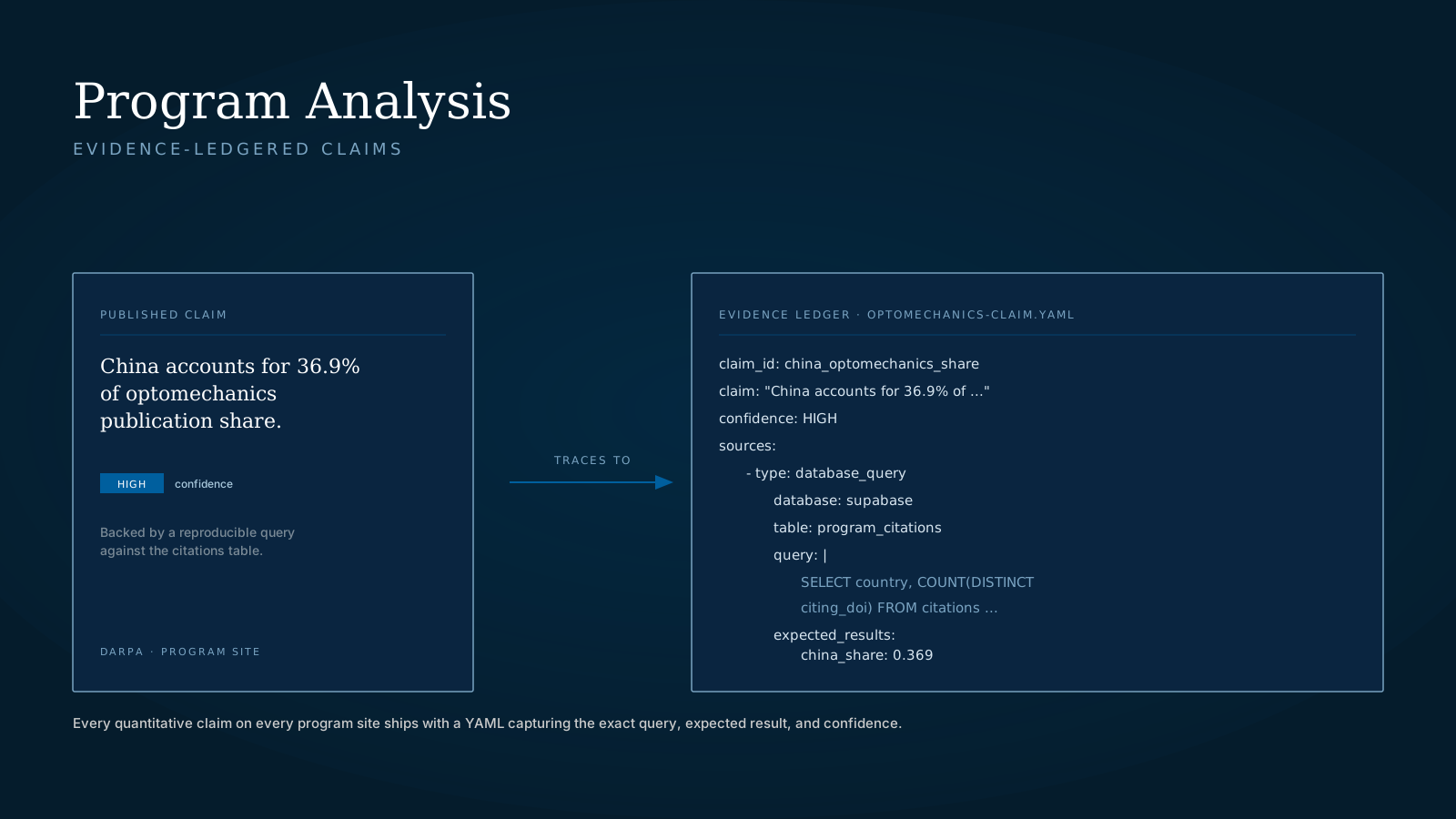
Per-program analytical sites where every quantitative claim links to a reproducible source and a stated confidence level.
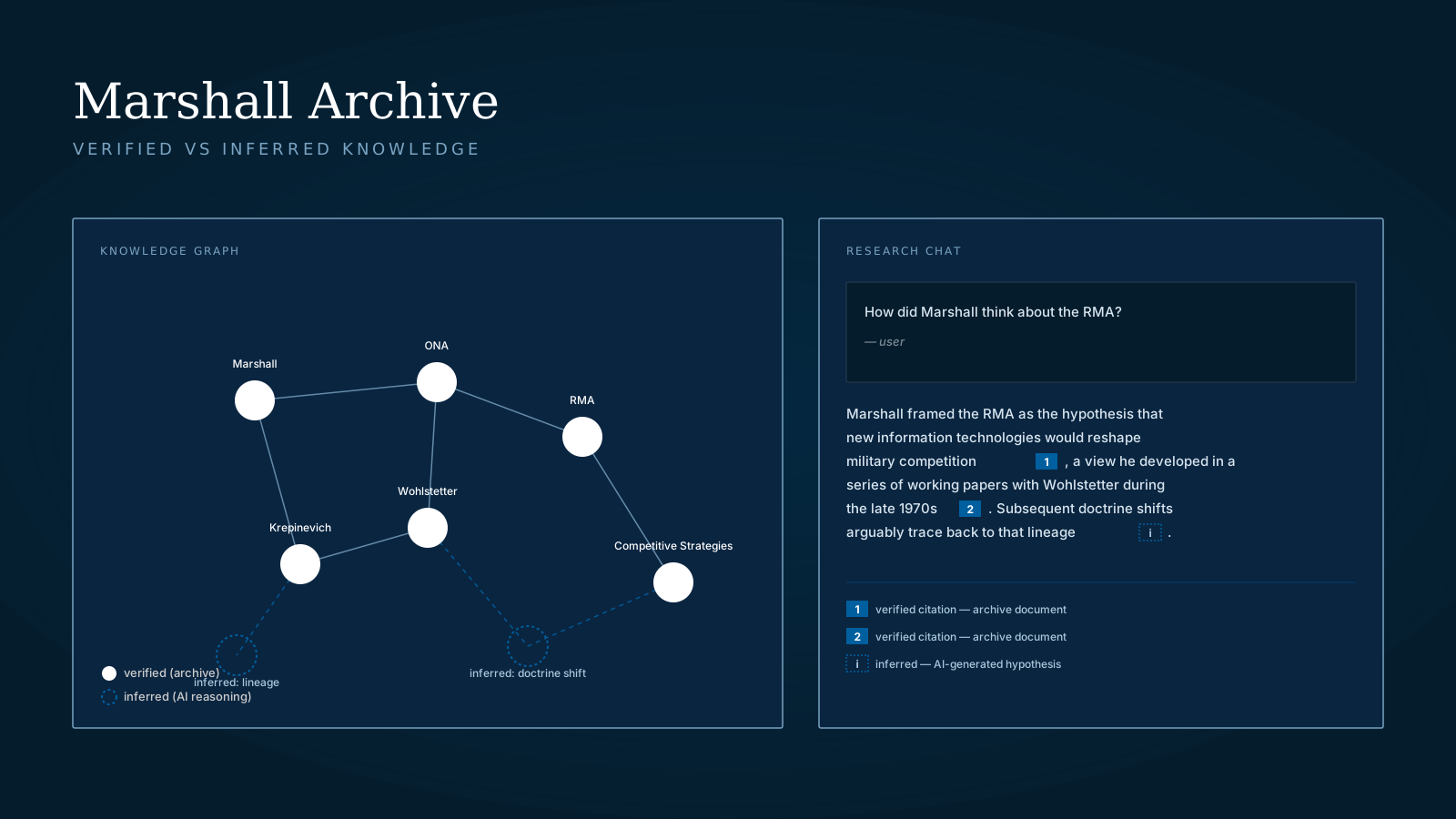
A knowledge-graph research console that opens Andrew Marshall's Office of Net Assessment tradition to a new generation of strategists.
Tell us about the decision you're trying to improve. We'll schedule a briefing with our principals to understand your environment and see whether the fit is right.
Schedule a briefing