Program Analysis Product
Research program offices
Program analysis sites: evidence you can audit
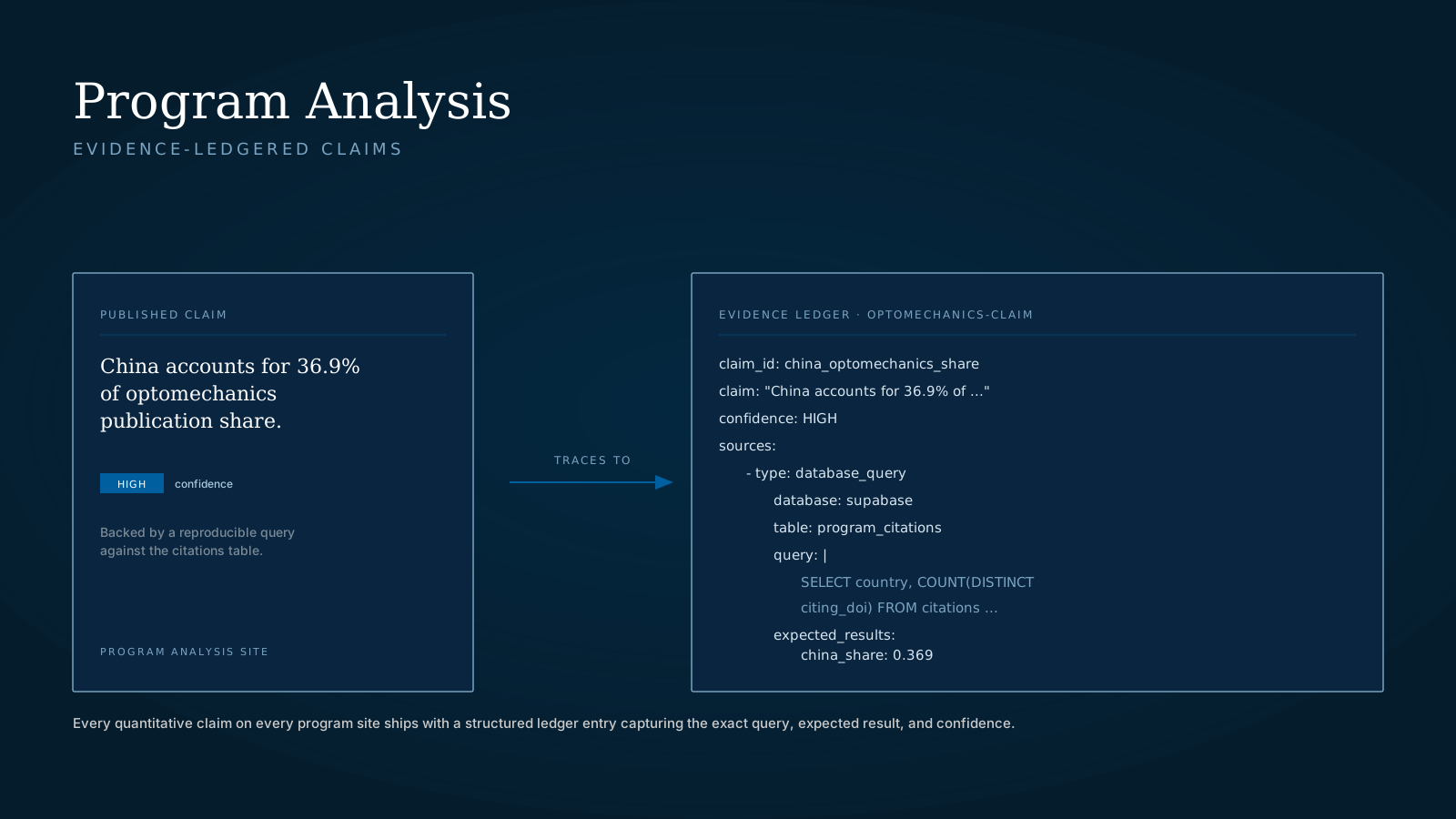
Per-program analytical sites where every quantitative claim links to a reproducible source and a stated confidence level.
See the engagement
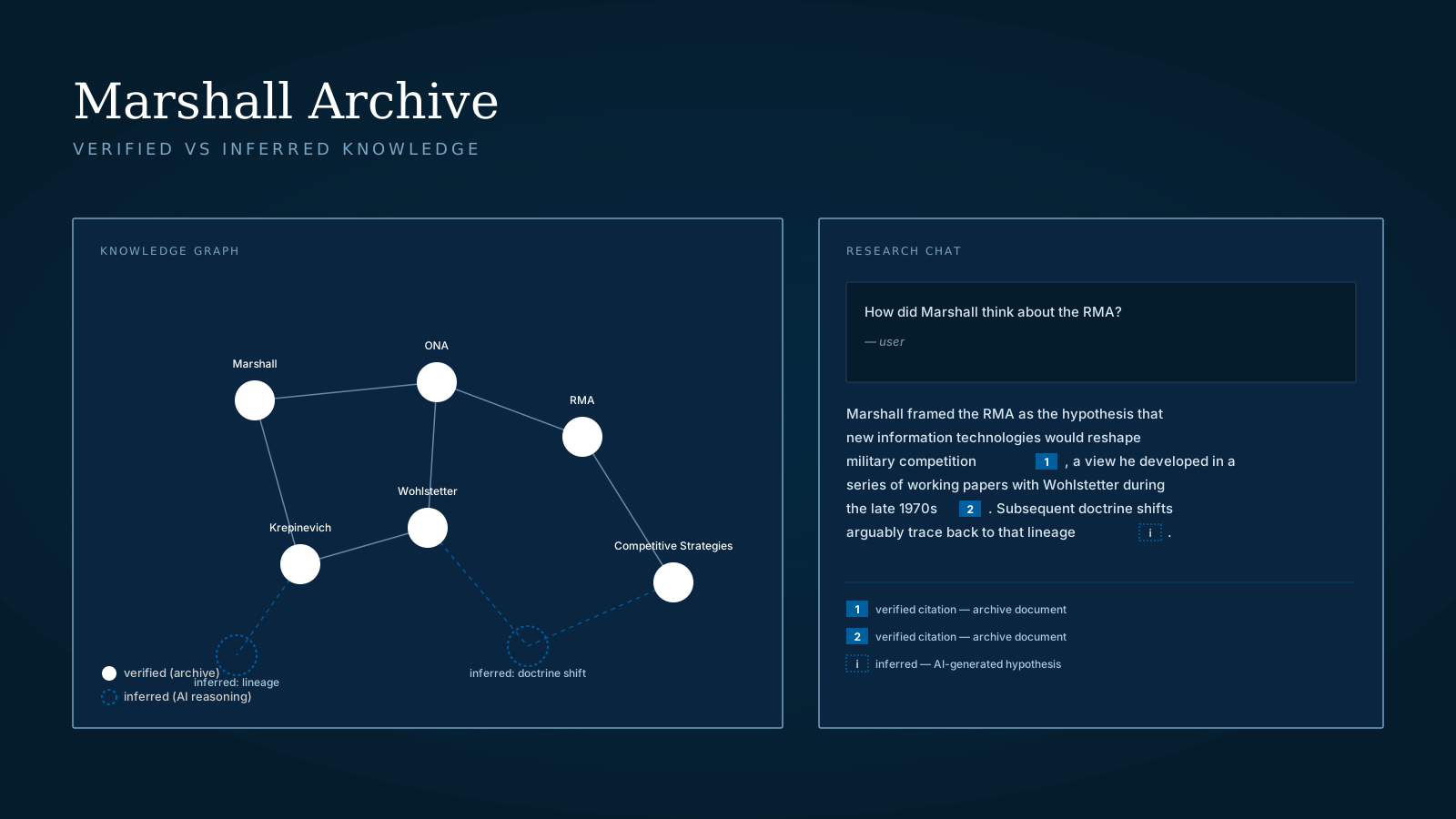
For the Andrew W. Marshall Foundation, Syntheos built a research console over decades of scattered documents from the Office of Net Assessment tradition. Every answer cites the passages it rests on, by document and page, with a link to the original PDF. Where an answer reasons beyond its sources it says so, and its figures draw cited material solid and inferred material dashed.
Andrew Marshall ran the Office of Net Assessment for 42 years. The intellectual tradition around him (game theory, competitive strategies, the Revolution in Military Affairs debate, decades of thinking about long competitions) lives in scattered documents, oral histories, and the heads of people who worked with him. A graduate student writing about strategic assessment today has no way to ask the archive a question. A researcher building on Marshall-style net assessment has to know where to look before they can look.
The Andrew W. Marshall Foundation wanted to fix that.
A research console. The archive is a collection of PDFs, and the console reads them as passages. A researcher types a question. The system searches the passages two ways at once, by meaning and by exact wording, merges the two result lists, and reranks them before the model writes anything. The answer streams back with numbered citations.
Click a citation and a card opens beside the sentence. It shows the document title, the page range, and the quoted passage, with a button that opens the original PDF. A column on the right holds the evidence for whichever answer is on screen, and it follows the reader as they scroll back through the conversation.
Many answers also come with a figure. Once the answer is written, the system decides whether a picture would help and draws one of nine kinds, among them a relationship map, a timeline, a comparison, and a flow diagram. The marks in a figure point back to the citations they came from.
A second mode lets a researcher browse before asking. The archive can be explored by collection and by theme, and the Marshall papers can be walked box by box and folder by folder, the way the physical archive is arranged. A researcher can save documents and then put a question to just those. A line of inquiry can be saved and picked up later.
Every citation is a direct quote from a PDF, with its page range. When an answer reasons past what the sources say, it says so in plain prose, and the reasoning carries no citation number.
Figures follow the same rule. A mark that rests on a cited passage is drawn solid. A mark the model inferred is drawn hollow with a dashed outline, and the key says which is which. When the main point of a figure is itself an inference, the figure is labeled interpretive.
None of this requires the user to trust the model. If the answer says Marshall developed his RMA thesis in working papers with Wohlstetter during the late 1970s, the user can click and read the working paper.
A box of PDFs and an institutional memory that lived in a few people's heads and was eroding.
Eight to fourteen weeks. We need the corpus (documents, oral histories, structured metadata), subject-matter-expert time to name the themes that matter and to judge the answers on real questions, and a hosting target. You get the deployed research console, the ingestion pipeline, and documentation for adding new material over time.
A specialist archive without a console is a private library. The few people who know it well can use it directly. Everyone else is asking the librarian, and the librarian is busy. A research console opens the archive to questions from researchers the original archivist never met, and makes the tradition portable in a way it never was when it lived in a few people's heads.
It's a fit for foundations, research institutes, agencies, and university programs that hold a specialist corpus and want researchers to interrogate it as a body of thought. It's not a fit if the corpus is already well-indexed by mainstream search. That problem is solved elsewhere.
We've written a two-page business case for this engagement shape. Executive summary, problem statement, deliverables, risks, success metrics, investment range. Read it in the browser or print it to PDF and forward.
Read the business casePer-program analytical sites where every quantitative claim links to a reproducible source and a stated confidence level.
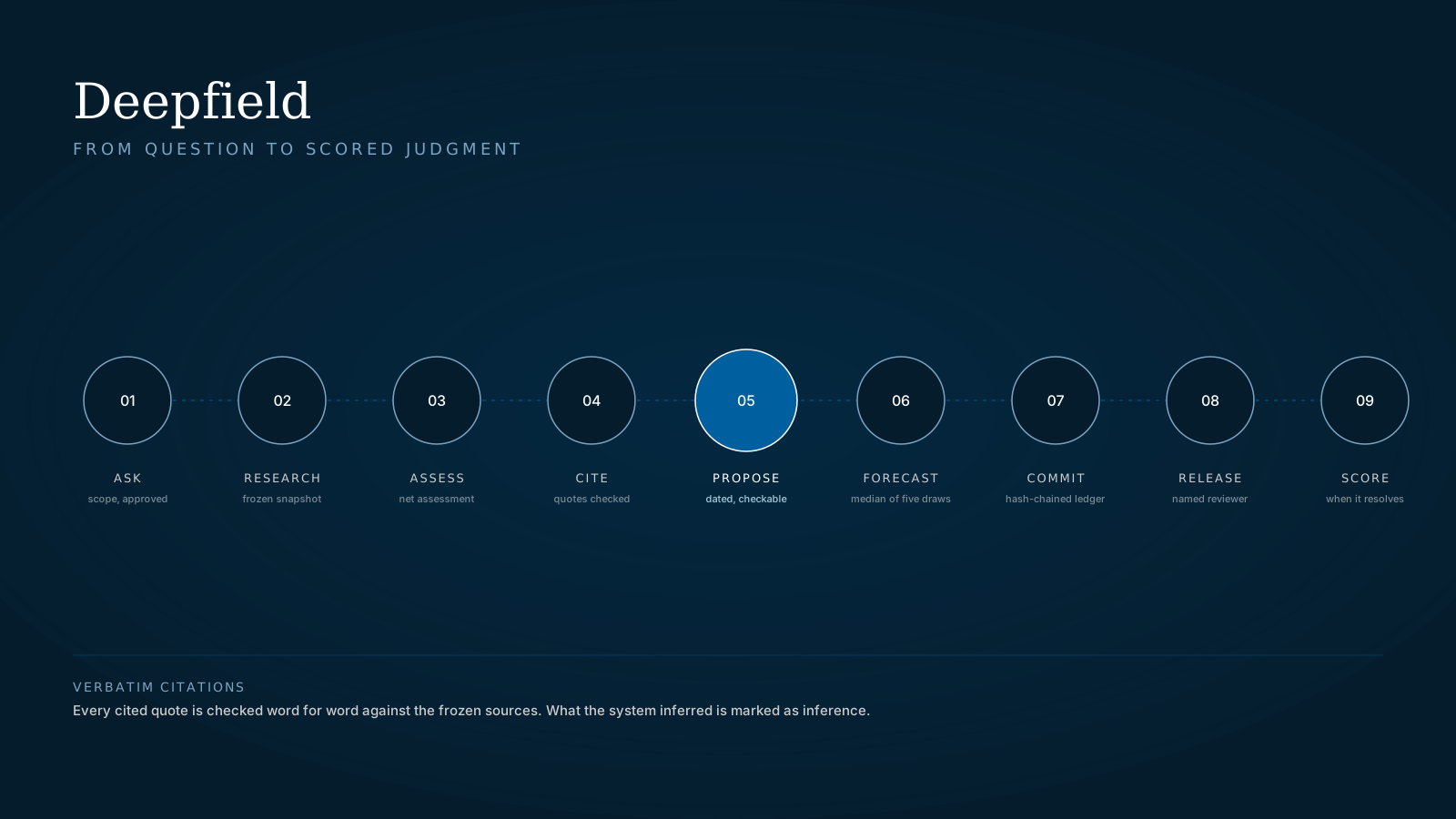
A strategic assessment platform that quotes its sources word for word and backs each key judgment with dated predictions that get scored.
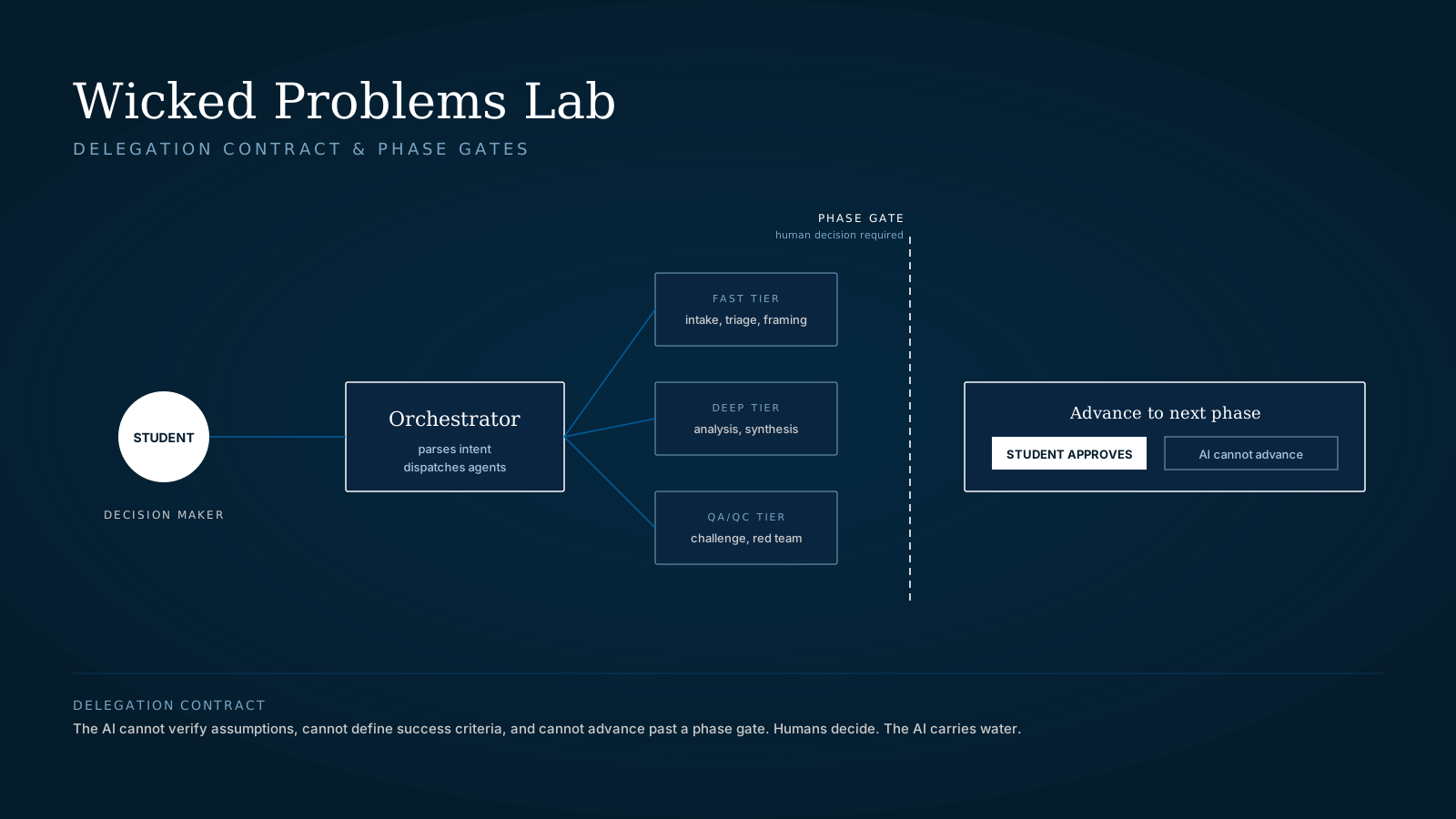
A teaming platform in classroom use at Georgetown. The AI listens quietly and helps on request, while phase gates, peer review, and a twelve-rule delegation contract keep every real judgment in student hands.
Tell us about the decision you're trying to improve. We'll schedule a briefing with our principals to understand your environment and see whether the fit is right.
Schedule a briefing