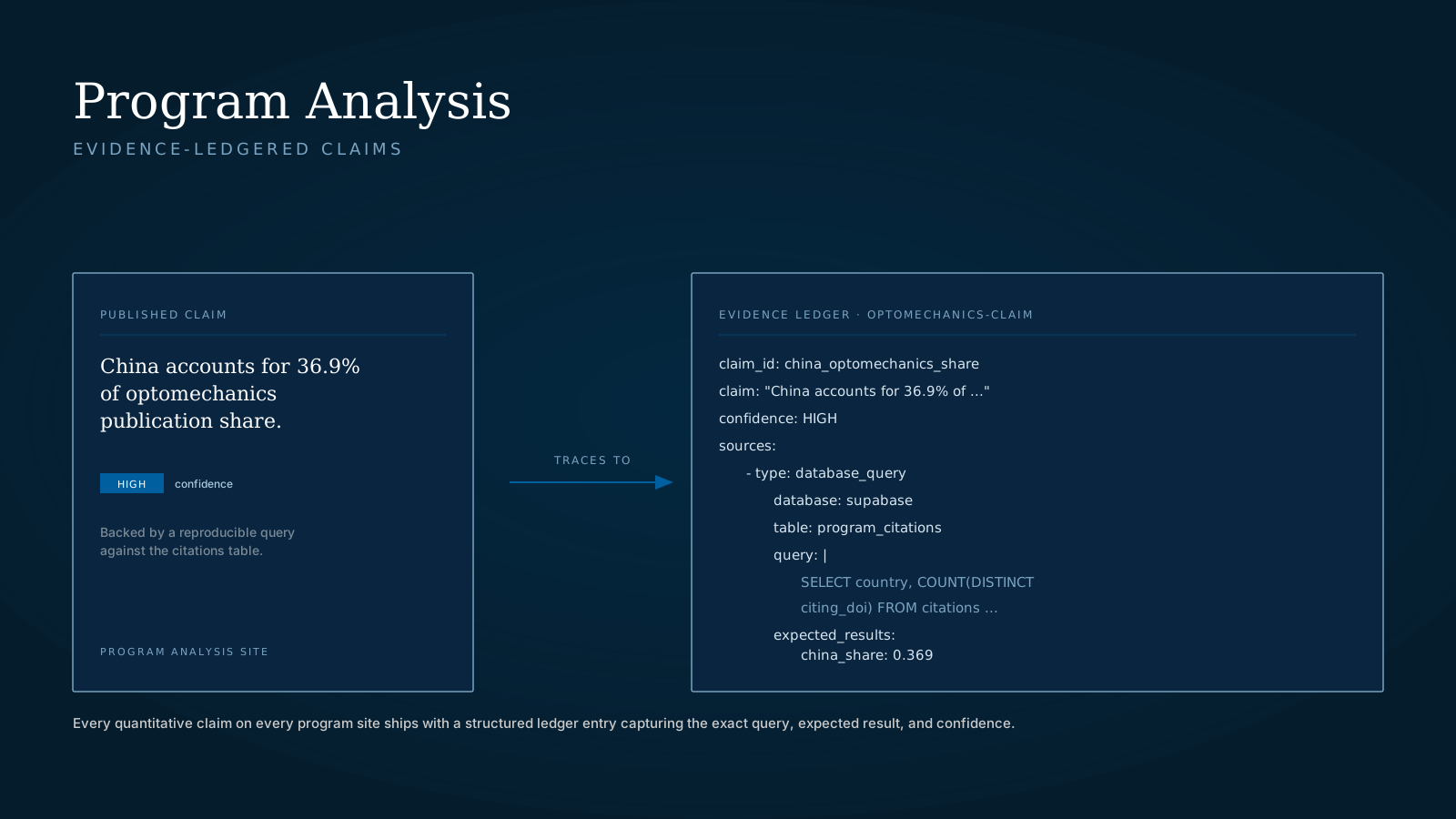
Program Analysis Product
Research program offices
Program analysis sites: evidence you can audit
Per-program analytical sites where every quantitative claim links to a reproducible source and a stated confidence level.
See the engagement
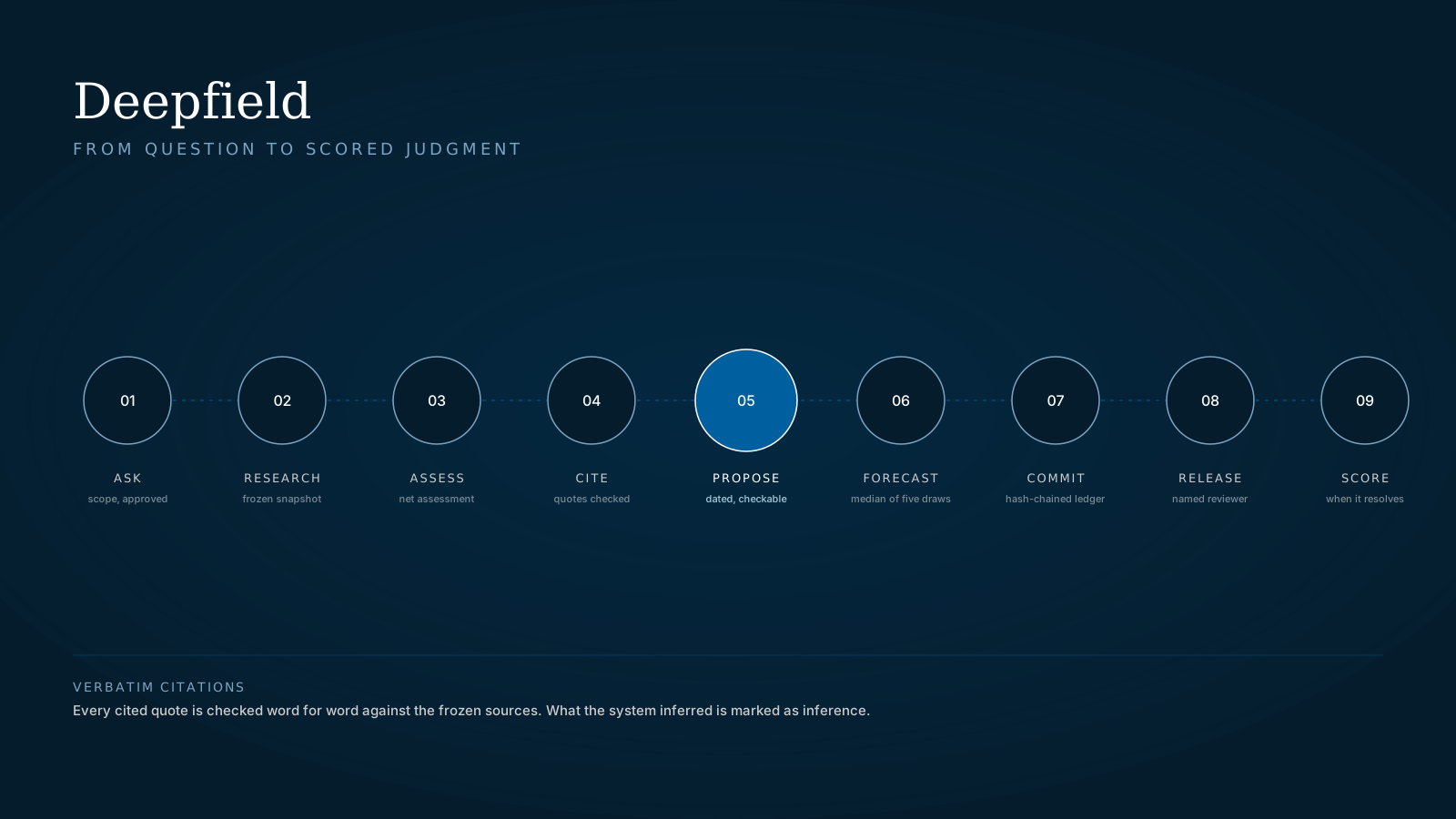
Deepfield turns a strategic question into a net assessment a decision-maker can read. Every cited quote is checked mechanically against a frozen snapshot of the sources, anything the system inferred is marked as inference, and each key judgment is backed by dated, checkable propositions that are forecast, committed to a ledger, and scored when they resolve. Our analysts review the key judgments by hand against the sources before an assessment goes out.
Strategic assessment usually ends in a slide deck. The deck is stale within a quarter. The world has moved by then, and the analyst's reasoning is locked in a PDF that nobody can ask another question of. Nobody ever finds out whether its judgments were right, either. The program office's choices are to live with the stale answer or pay for another that will be stale in three months.
We built Deepfield because we wanted to stop selling memos.
We built Deepfield with the Andrew W. Marshall Foundation. Its report follows the net-assessment tradition Andrew Marshall built at the Office of Net Assessment. It says what the competition is, how the balance stands and where it's moving, which asymmetries matter, what's being assumed, what could happen, and what we judge most likely. The question can be geopolitical, commercial, or personal.
Every assessment also ends in predictions written down before the fact. The system's job is to write good ones, score them honestly, and learn from the scores.
A run goes like this.
Each run keeps the searches as issued, the sources as retrieved, every prompt, the model and provider that answered, and every response. The report is rendered from that record and nothing else, so anyone with access can see exactly what the system saw and said.
Every statement in a Deepfield assessment either cites source passages or is marked as the system's own inference. A citation carries a verbatim quote, and the quote is checked mechanically. It has to appear word for word in the cited passage of the run's frozen source snapshot. A quote that fails the check goes back to the model with the failures listed, at most twice. If it still fails, the run fails. A citation is never quietly dropped.
The key judgments get a second kind of check, from the world. The propositions behind them are dated and settled by a named source, so a judgment that said "likely" can later be shown to have held or not. Every committed forecast counts toward the track record, including those from runs that were sent back, and the report states that track record with its sample size.
Then people read it. Before an assessment goes out, our analysts review the key judgments by hand against the sources and fix or cut what doesn't hold.
The first version, retired in October 2026, ran sixteen stages, including a knowledge graph, competing-hypotheses reasoning, course-of-action generation, and wargaming. It grew faster than anyone could verify it. We rebuilt Deepfield around a small core that does the whole job end to end. Wargaming, courses of action, and competing-hypotheses matrices are out of the core, and each comes back only when it can show with evidence that it makes the assessments better.
The default alternative is a consultancy engagement that delivers a PDF. Deepfield is the infrastructure underneath that engagement, kept running. The same question can run again when the world changes, without re-paying for the analyst's learning curve. Any claim in it can be checked against the passage it quotes, and its predictions get scored.
Deepfield is a platform we embed. A typical engagement runs 12 to 16 weeks. We set it up for your domain, work through the scope of your first questions with your team, and run the first real assessment together. At the end you keep the running system, the code, and your data.
It's a fit when you have a recurring assessment need and a requirement that the conclusions you act on be checkable against the evidence behind them. If your decision is one-shot and never repeats, Deepfield is too much infrastructure. If it's ongoing and the stakes are high, a platform you run yourself costs less over the first year than two consulting engagements, and its track record grows with every question you ask.
We've written a two-page business case for this engagement shape. Executive summary, problem statement, deliverables, risks, success metrics, investment range. Read it in the browser or print it to PDF and forward.
Read the business casePer-program analytical sites where every quantitative claim links to a reproducible source and a stated confidence level.
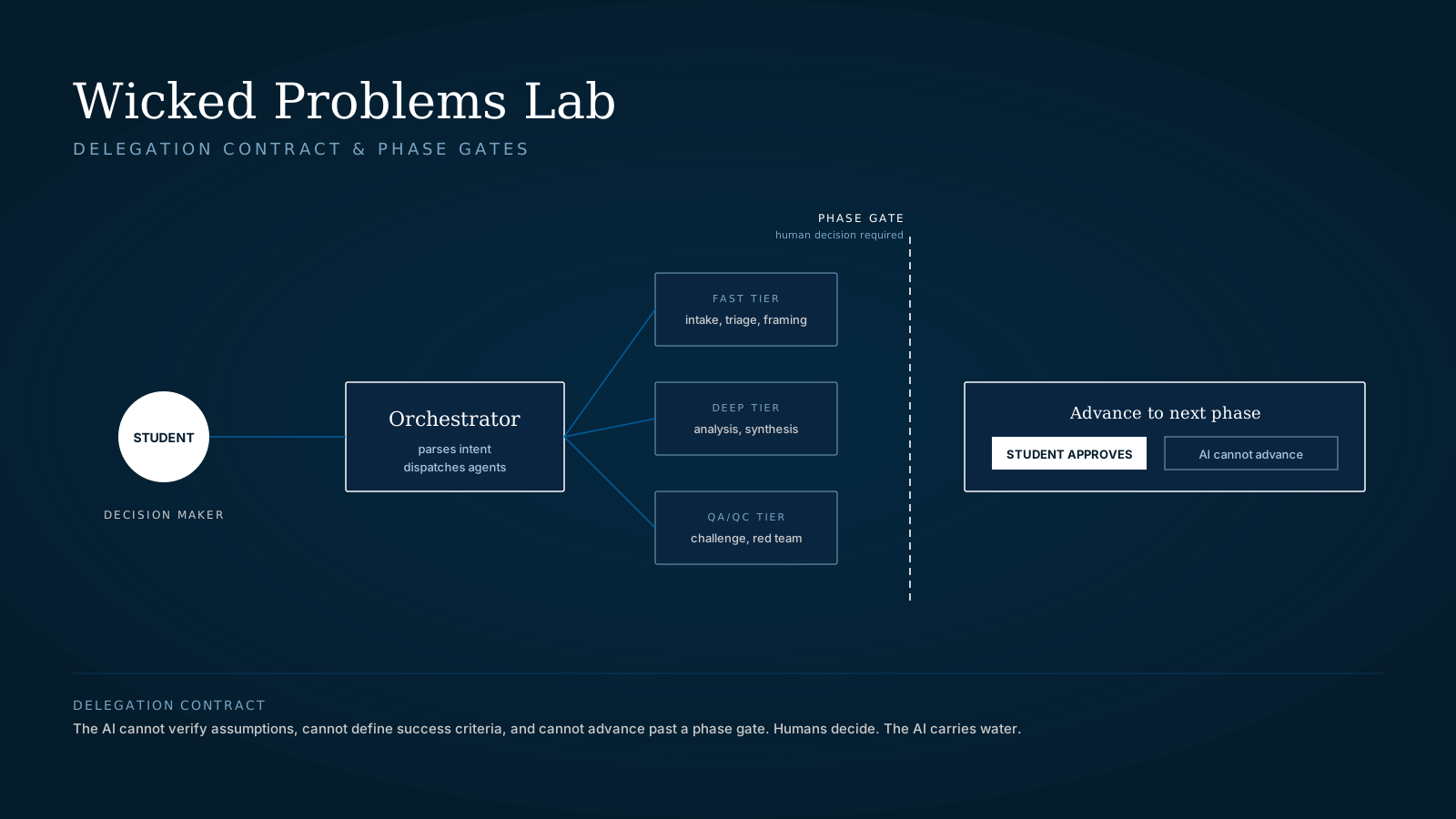
A teaming platform in classroom use at Georgetown. The AI listens quietly and helps on request, while phase gates, peer review, and a twelve-rule delegation contract keep every real judgment in student hands.
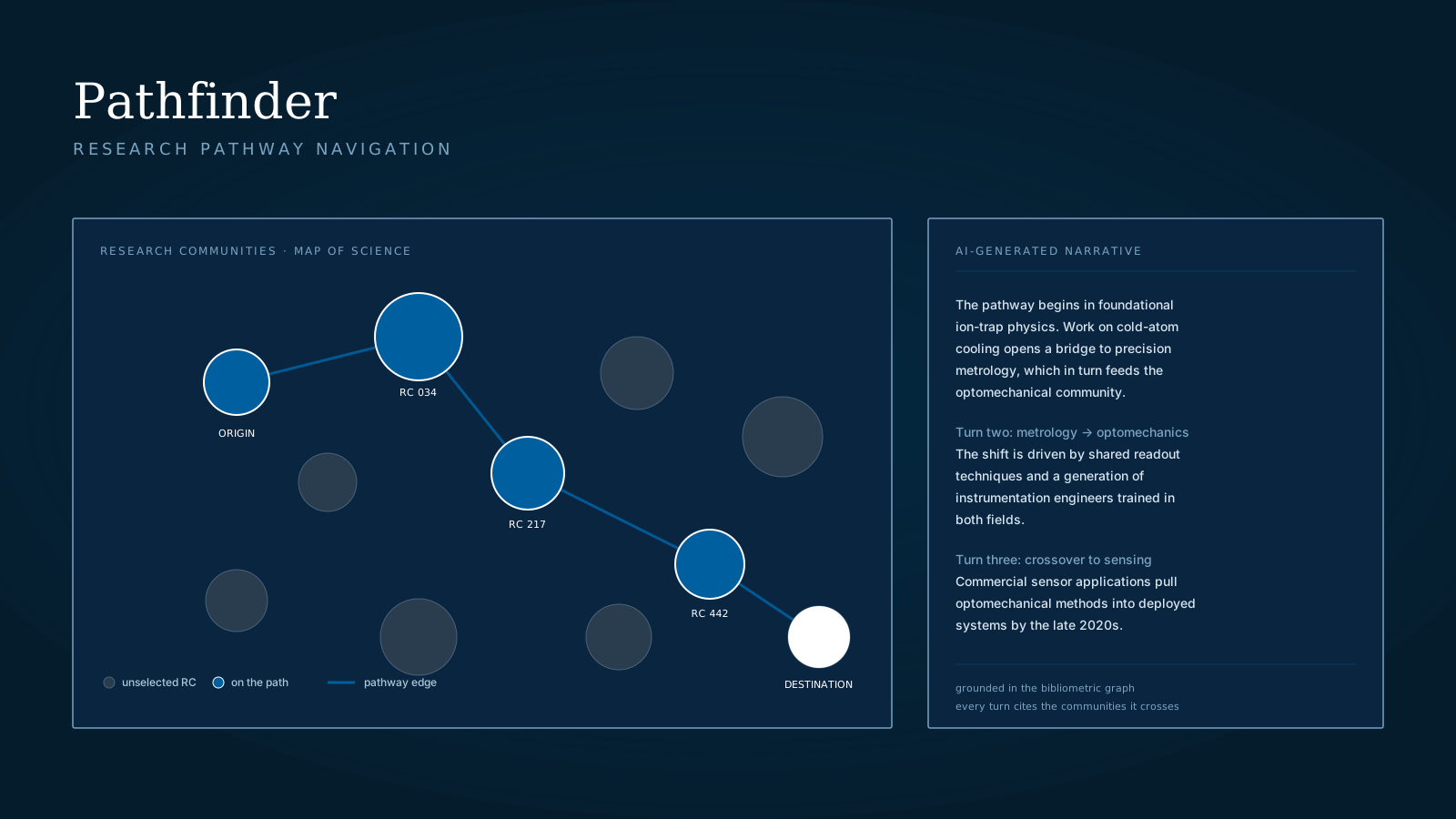
A research pathway explorer that lets users chart and narrate routes between research communities on a global map of science.
Tell us about the decision you're trying to improve. We'll schedule a briefing with our principals to understand your environment and see whether the fit is right.
Schedule a briefing