Program Analysis Product
Research program offices
Program analysis sites: evidence you can audit
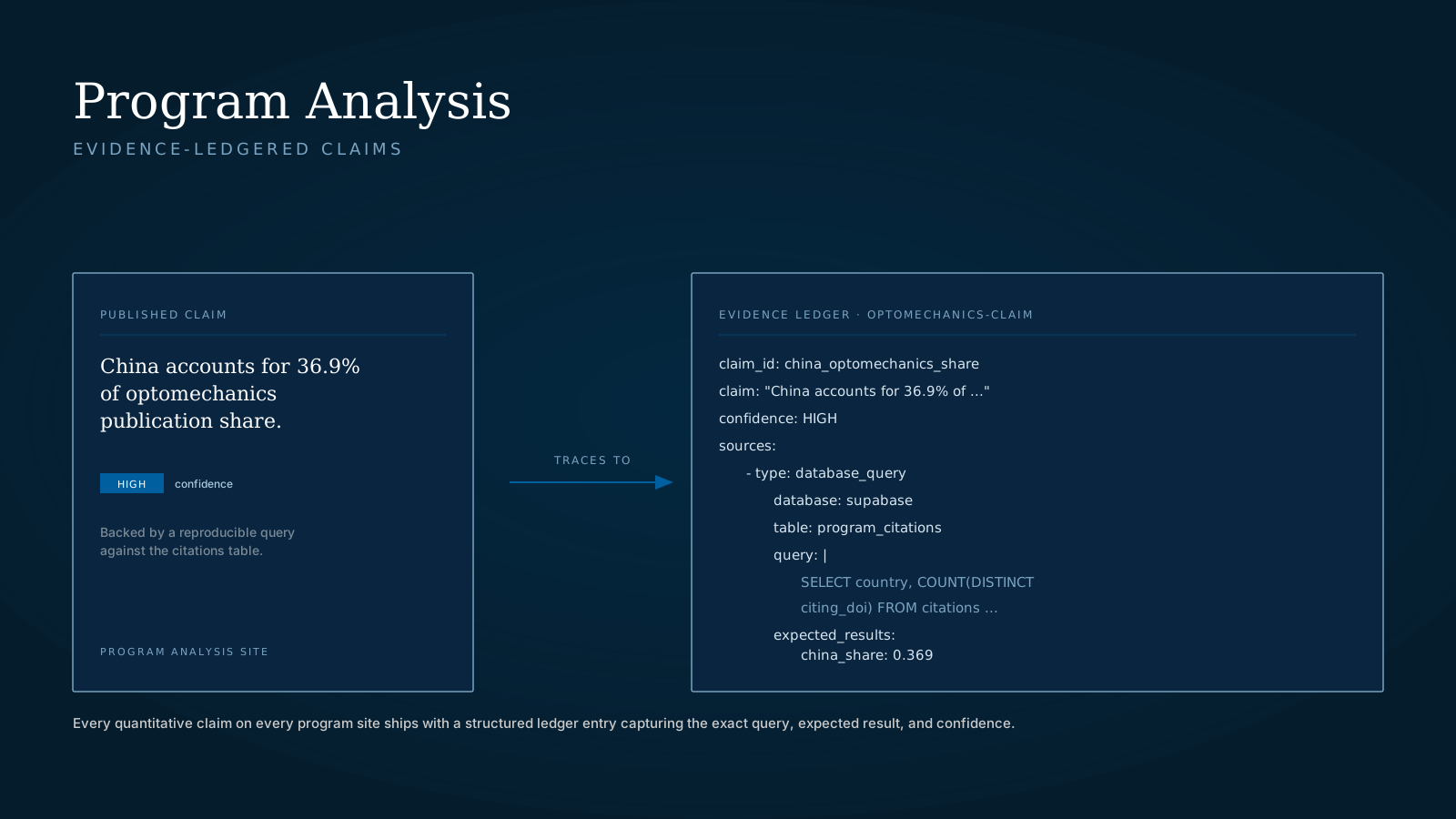
Per-program analytical sites where every quantitative claim links to a reproducible source and a stated confidence level.
See the engagement
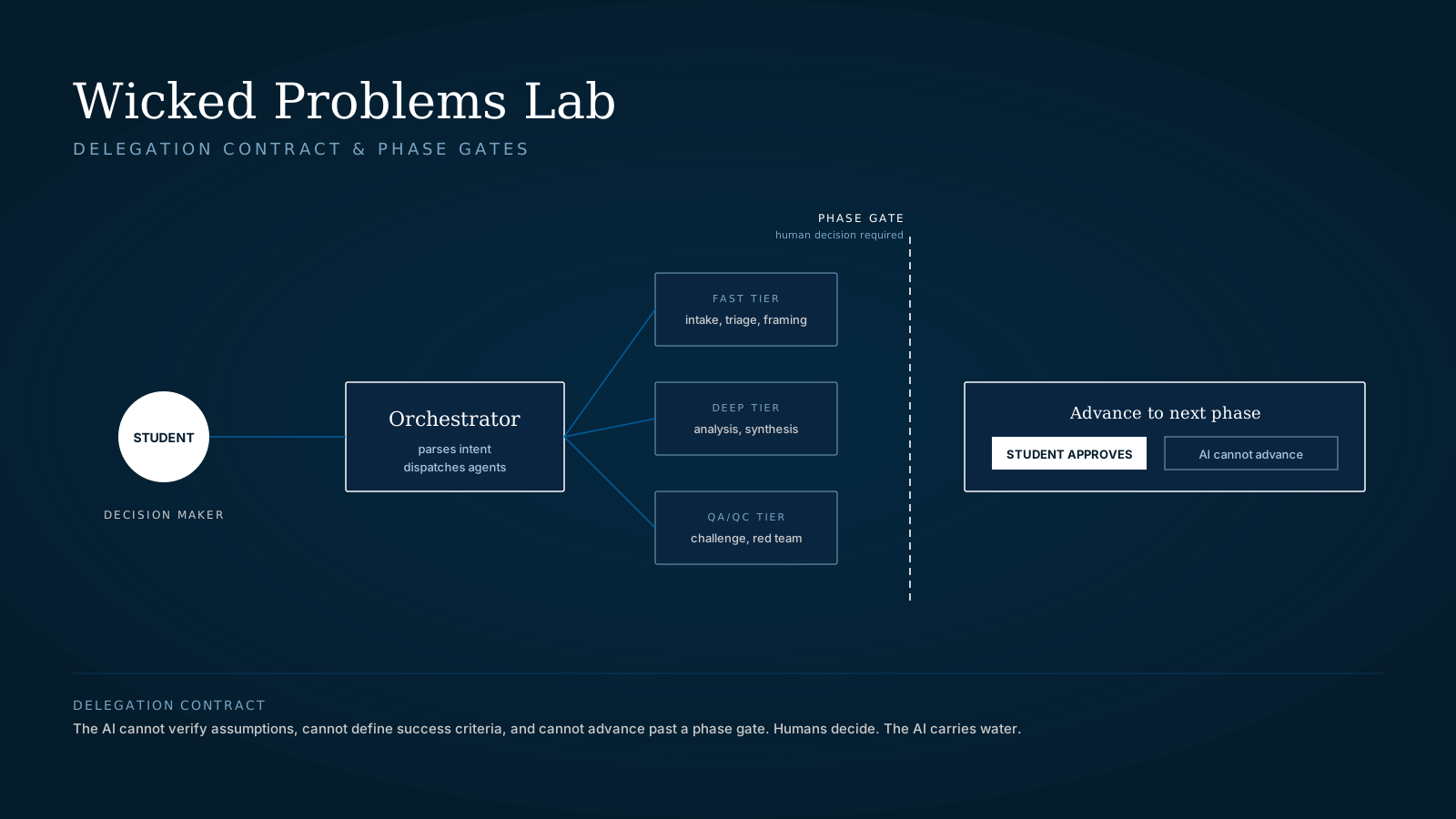
For Georgetown's Security Studies Program, Syntheos built the Wicked Problems Lab, a platform where student teams work complex policy challenges alongside an AI that listens quietly and runs analysis on request. A delegation contract bars the AI from verifying assumptions, defining success criteria, or advancing the team past a phase gate. Every AI contribution arrives as a proposal a student accepts or rejects.
Georgetown's School of Foreign Service teaches security studies students to reason about wicked problems. These are complex policy challenges where the right answer depends on judgment, framing, and willingness to sit with ambiguity. Off-the-shelf AI tools are eager to give students the answer. That's exactly the wrong behavior for teaching policy reasoning. An AI that writes the student's analysis teaches the student nothing except how to paste.
The faculty wanted something different. They wanted a teaming platform where the AI helps with the mechanical parts of analysis (retrieving sources, surfacing counterexamples, flagging weak evidence) while leaving every real judgment where it belongs.
The Wicked Problems Lab. Student teams work through four phases, which are problem articulation, refinement, solution planning, and pressure testing. Georgetown students are using it in class in the fall 2026 term.
The center of the screen is the team's draft white paper. It opens section by section as the team advances, and it keeps every version. Around it sit the team's assumptions, constraints, sources, and a four-list scaffold. The scaffold separates what the team believes about the world from what it plans to do, what it predicts will happen, and what it fears might.
An early version had the AI respond to every message. We took that out. The AI now listens quietly. A student can ask a private coach to tighten wording they've already written, a team can put a question to the shared channel, and anyone can run an analysis tool on demand (a stakeholder map, a premortem, a suggested edit to the draft, a longer research question). Specialized agents sit behind those tools in three tiers. A fast tier handles intake and framing, a deeper tier does synthesis, and a QA tier checks the work. Whatever an agent produces arrives as a proposal. A human accepts it or it goes nowhere.
Instructors see across teams, assign peer reviews, and can waive an advisory blocker when a team is stuck for a bad reason.
A team can't finish alone. Before a project closes, an instructor assigns another team to review it. The reviewers get read access to the draft, the scaffold, and the constraints while the review is open, and they lose it when the instructor arbitrates. The final gate stays shut until at least one review has been arbitrated.
Tradeoffs get the same treatment. When a team accepts a tension in its plan as a cost worth paying, the platform records it as a constraint and brings it back during pressure testing. The team has to say what became of it. It turned out to be a failure mode, or they addressed it, or it no longer applies.
Each project opens with a problem classification card, an instrument from the course that asks the team to score what kind of wicked problem it's facing. The team fills it in. The AI may suggest a revision to a field the team has already completed. On an empty field it may only ask a question. It can't supply the first answer, and a database constraint holds that line along with the prompt.
The platform's most important code is the smallest. It's a delegation contract, twelve rules that constrain what the AI is allowed to do inside the learning loop. Three of them carry most of the weight.
The AI cannot verify the team's assumptions. If a student states an assumption, the system records it as an open assumption and surfaces it for pressure testing. The AI never marks an assumption as "verified" on the student's behalf.
The AI cannot define success criteria. Students decide what a good answer looks like for their project. The AI can suggest criteria to consider, but it cannot write them into the project record.
The AI cannot advance the team past a phase gate. The platform enforces phase transitions at the database level. An agent cannot call "you're done, move on." Only the team's human decisions, captured through specific UI actions, can trigger a transition.
Those three are the oldest of the twelve, and the later ones follow the same line. They bar the AI from marking a constraint as satisfied and from accepting its own edits to the draft. A red-team critique has to reach the team as questions, never as a verdict.
Short rules. They change the whole shape of the product. A platform that enforces them turns the AI into a teaching tool, and a platform without that enforcement would amount to a chatbot subscription with extra steps.
Two alternatives, both bad. The first is keeping AI out of the classroom entirely, which misses the chance to teach students how to work with these tools in a professional setting. The second is letting a generic assistant write the analysis, which misses the point of the class. The Wicked Problems Lab is the third option. AI in the room, under discipline.
Fourteen to eighteen weeks for a first deployment. We need faculty time to define the phase sequence, the success-gate criteria, and the agent library for the domain. You get a deployed platform with the orchestrator, the agent library, the gate enforcement, instructor tooling, and a voice subsystem if the classroom wants it.
The classroom exists to develop the student's judgment. Output is a side effect. The job of the student is to do the thinking, badly at first and better over time. An AI that does the thinking on the student's behalf forecloses the development the classroom exists to produce. The platform's discipline is the product.
It fits universities, executive education programs, professional training, and any setting whose purpose is the development of human judgment. It's the wrong product if you want an AI that does the work and hands you the answer.
We've written a two-page business case for this engagement shape. Executive summary, problem statement, deliverables, risks, success metrics, investment range. Read it in the browser or print it to PDF and forward.
Read the business casePer-program analytical sites where every quantitative claim links to a reproducible source and a stated confidence level.
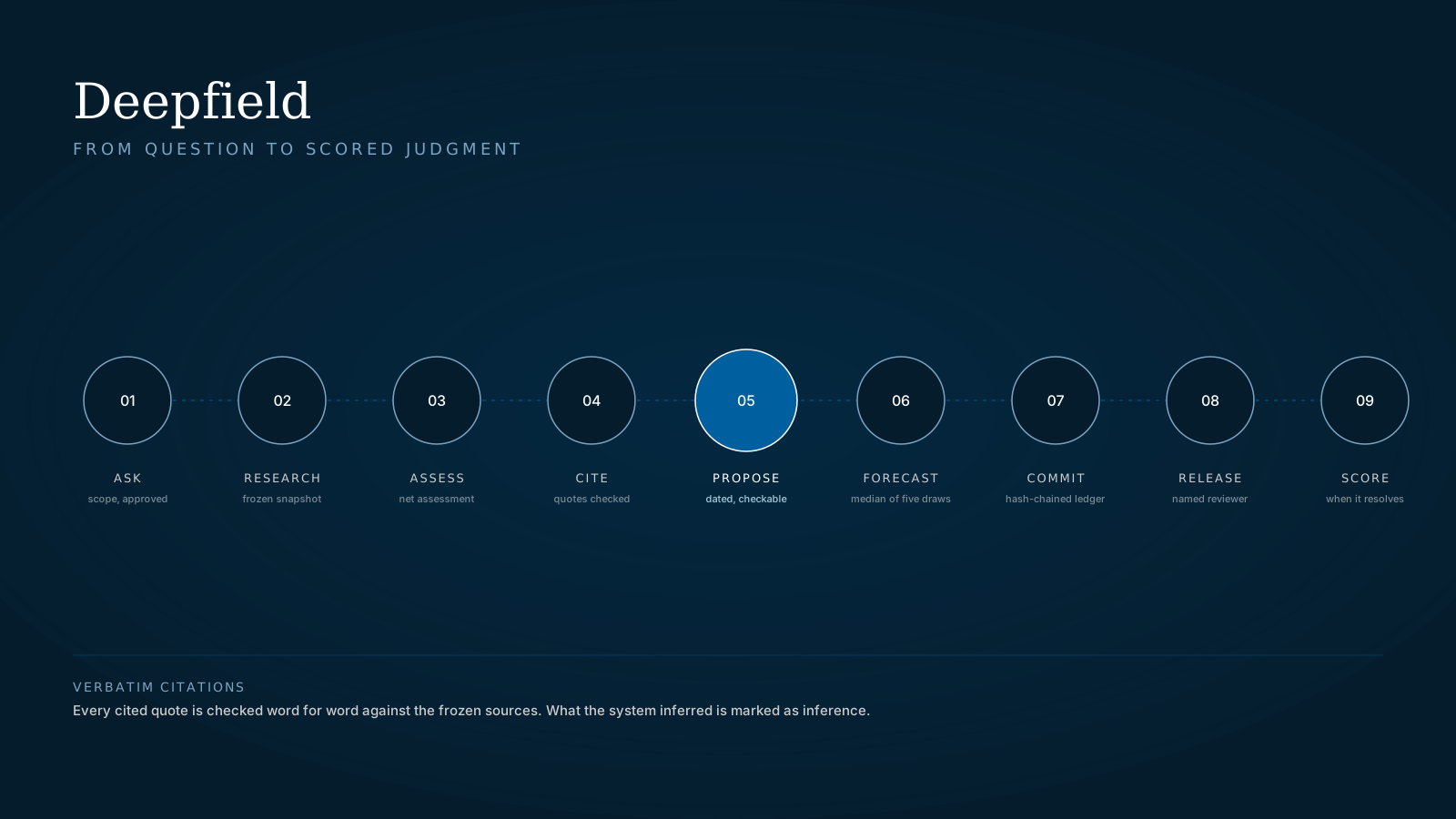
A strategic assessment platform that quotes its sources word for word and backs each key judgment with dated predictions that get scored.
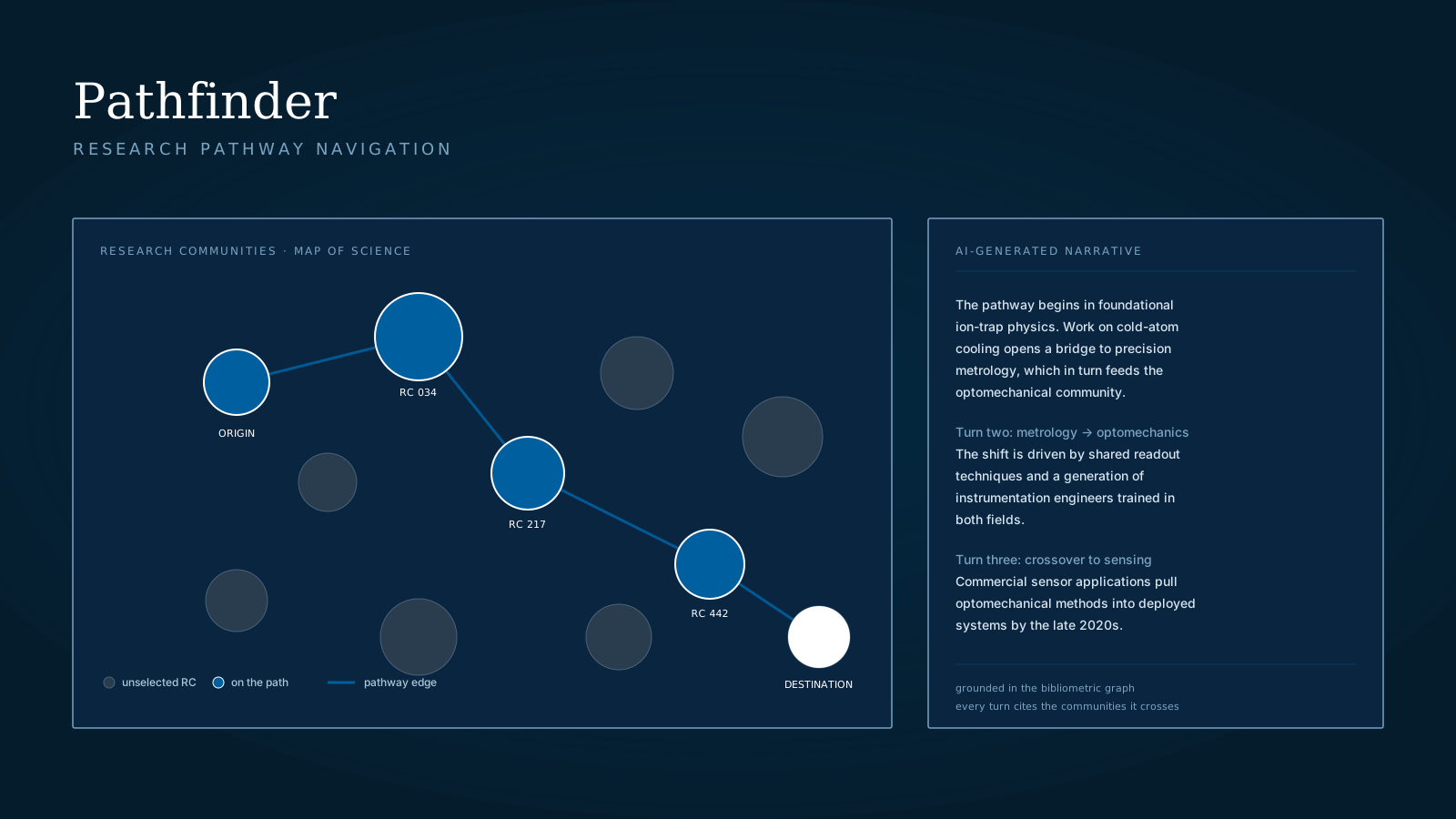
A research pathway explorer that lets users chart and narrate routes between research communities on a global map of science.
Tell us about the decision you're trying to improve. We'll schedule a briefing with our principals to understand your environment and see whether the fit is right.
Schedule a briefing